Eclipses are among the most spectacular phenomena in the sky, and for millennia they have sparked fear and fascination. Today we know exactly how they happen, and we can predict them centuries before, every second. In astrology, they are considered symbolic moments of “reset”; in astronomy, they are games of shadows governed by geometry.
The guide explains why the eclipses of the Sun and the Moon occur, what types there are, how long it lasts, how it repeats (the saros cycle), how you look at them safely and what astrology says about them. The astronomical side is accurate; the astrological side is symbolic.
Sun eclipse: the moon lies between Earth and the Sun
At an eclipse of the Sun, Moon passes directly between Earth and the Sun and designs its shadow on Earth. It can only happen at the New Moon, but not at every New Moon, because the Moon’s orbit is approximately 5 ° to the Earth’s orbit plane. The eclipse occurs only when Moon Nine occurs near one of the nodes (see monthly node guide e).
Type of solar eclipse
- Total: The moon completely covers the solar disc, and the day becomes brief at night; you can see the solar crown. The maximum duration of the totality is approximately 7 minutes and 30 seconds.
- Ring: The moon is further from the Earth and seems too small to cover the whole sun; it remains a bright ring.
- Partial: The month covers only part of the Sun, visible from wider areas around the total band.
- Hybrid: passes between ring and total throughout the route.
A remarkable coincidence makes total eclipses possible: The sun is about 400 times bigger than Moon, but also about 400 times farther away, so the two discs seem almost equal in the sky.
Moon eclipse: The Earth lies between the Sun and the Moon
At a lunar eclipse, Moon enters the shadow of the Earth. It can only happen at the full moon, all when it’s close to a knot. During the totality, Moon does not disappear, but becomes reddish (“Blood Moon”), because sunlight filtered and refracted through the Earth’s atmosphere still reaches it, similar to the sunset red. The total may take up to about 1 hour and 42 minutes. Unlike solar eclipses, lunar eclipses are seen from all over the hemisphere where Moon is above the horizon and can be seen with the naked eye.
| Sun eclipse | Moon eclipse | |
|---|---|---|
| Moon phase | New Moon | Full Moon |
| Who’s in the middle | Moon | Earth |
| Duration of totality | up to 7.5 minutes | up to 1 h 42 min |
| Visible from | b | a whole hemisphere |
| Safety | requires special filters | safe with the naked eye |
How thick are they?
Within one year, at least four eclipses appear (two of the Sun and two of the Moon) and at most seven. However, a total eclipse of the Sun is visible from a certain place only every few hundred years, on average, because the Moon’s shadow covers a very narrow band. That’s why people who want to see a total eclipse sometimes travel thousands of miles. Recently, the total solar eclipse of 12 August 2026 crossed Greenland, Iceland and northern Spain, and was observed by many European travellers.
Sarous cycle
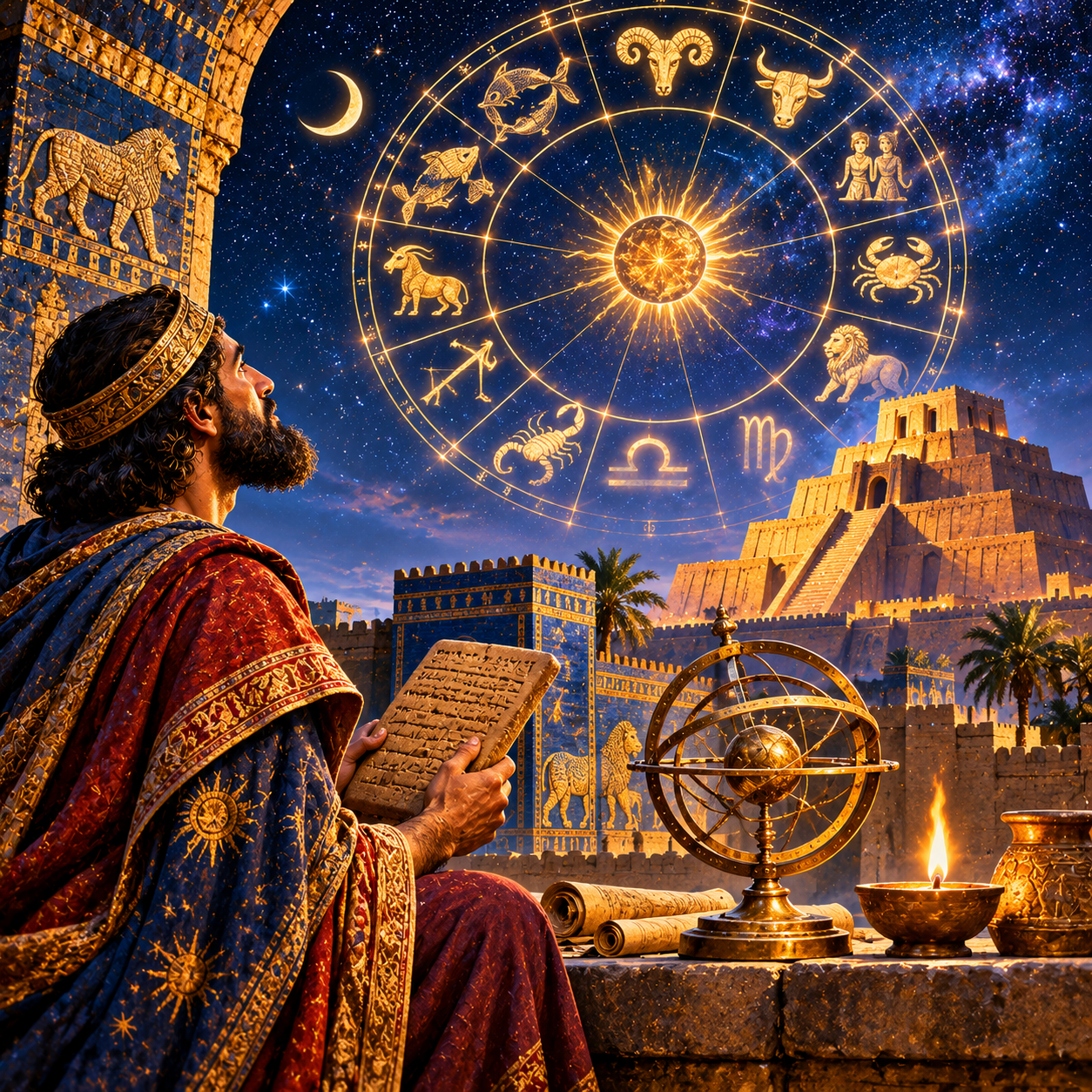
Eclipses are repeated in a cycle of approximately 6 585.3 days, i.e. 18 years, 11 days and 8 hours, called saros, still known by Babylonians. After a sarin, the Sun, Moon and the lunar node return in an almost identical configuration, so there is a similar eclipse. The extra eight hours cause the shadow to fall about 120 ° west on Earth, so an eclipse from the same series can be seen, after a saros, in another part of the world. There are dozens of large active series at the same time, which explains why eclipses occur every year.
How you look safely at an eclipse of the Sun
- Use ISO 12312-2 certified eclipse glasses. Ordinary sunglasses are not sufficient.
- Do not look at the Sun through a binoculars, telescope or camera without dedicated solar filter, mounted in front of the lens.
- Check the glasses before: if they are scratched or have no marking, do not use them.
- You can use indirect projection: a small hole in a cardboard projects the image of the Sun on a surface.
- Only in the total phase (when the Sun is fully covered) can you look without protection; as soon as even a beam reappears, put the glasses back on.
Direct looking at the Sun, even for a short time, can cause permanent damage to the retina, often painless. If in doubt, follow the eclipse in an online transmission or at an event organized by amateur astronomers.
What does astrology say about eclipses
In astrology, eclipses are “New and full moons amplified.” Tradition links them to moments of change, closure or reorientation, and the 18.6-year cycle of nodes is used to talk about “karmic themes.” Eclipses are calculated in signs, and an astrologer follows if the eclipse falls close to a planet or an angle in your native map (see angle guide). These interpretations are symbolic and scientific evidence that eclipses influence events does not exist. For the monthly cycle in general read the article on the phases of the Moon.
Eclipses in history and culture
Eclipses were interpreted in many cultures as bad signs or heavenly battles. The ancient Chinese and Babylonian chronicles systematically note them, and today these recordings help astronomers calculate the slowing down of the Earth’s rotation. In the 5th century BC, the philosopher Thales of Milet is credited, according to tradition, with predicting an eclipse; details are discussed by historians. In 1919, the observation of a total eclipse confirmed one of the predictions of Einstein’s general relativity theory: the deflection of starlight by the Sun’s gravity.
How do you find out when it’s next?
The official astronomical calendars (observatories or NASA) list all eclipses per year with visibility maps. Always check the map for your locality, because the same eclipse can be total in one place, partial in another and invisible in the third. On the site you can also follow the astrological calendar, which marks the phases of the Moon.
What you see during a total eclipse of the Sun
Those who have seen a total eclipse often describe it as one of the most powerful experiences of seeing the sky. Minute before full, the light drops, the temperature drops, the birds shush, and the shadows become strangely sharp. The second Moon covers the last shred of the Sun, the crown appears: a silver-white halo around the black disk, only visible then. You can also see the red protrusions at the edge of the Sun, and Venus and several bright stars become visible during the day. Everything usually takes between one and four minutes.
Eclipse and Moon: Why Moon Distance
The moon moves away from Earth at approximately 3.8 centimeters per year. In hundreds of millions of years, it will be too small in the sky to fully cover the Sun, and the total eclipses will become ringed. The age of total eclipses is, therefore, relatively short on the scale of Earth’s history, which makes our generation live in an appropriate time for them.
Common
- Using ordinary sunglasses. It does not provide sufficient protection.
- The look at the Sun by a phone or camera without filter. It can damage both the sensor and the eyes.
- The assumption that a partial eclipse is “less dangerous’. Radiation is equally intense.
- The confusion between the eclipse and the new moon. Only at Moon Nine near a node an eclipse appears.
Frequently asked questions
Is a lunar eclipse dangerous?
It can be seen freely, with the naked eye or with binoculars.
Why does Moon get red?
Because the Earth’s atmosphere refracts red sunlight to the shadow, like at sunset.
How many eclipses are there in a year?
Between four and seven, together, by the Sun and the Moon.
Predicting eclipse events?
There’s no evidence. They’re predictable astronomical phenomena with symbolic interpretations of astrology.
Astronomical information is verifiable. For observing solar eclipses, it always uses certified protection.