At first, astrology can seem like a language with many symbols and rules. The simplest entry into this universe is to understand “basic triad”: zodiac, ascendant and Moon. They do not describe three different personalities, but three interpretations of the same person.
Astrology is an interpretive practice and can be used as a form of reflection or entertainment, not as a science, nor as a safe way to predict the future. In a native map, the positions of the Sun, the Moon and the planets are associated with zodiac signs at the time of birth. ([openstax.org]] (https: / / openstax.org / books / astronomy / pages / 2-3-astrology-and-astronomy? utm _ source = openai)
What does “sign” mean?
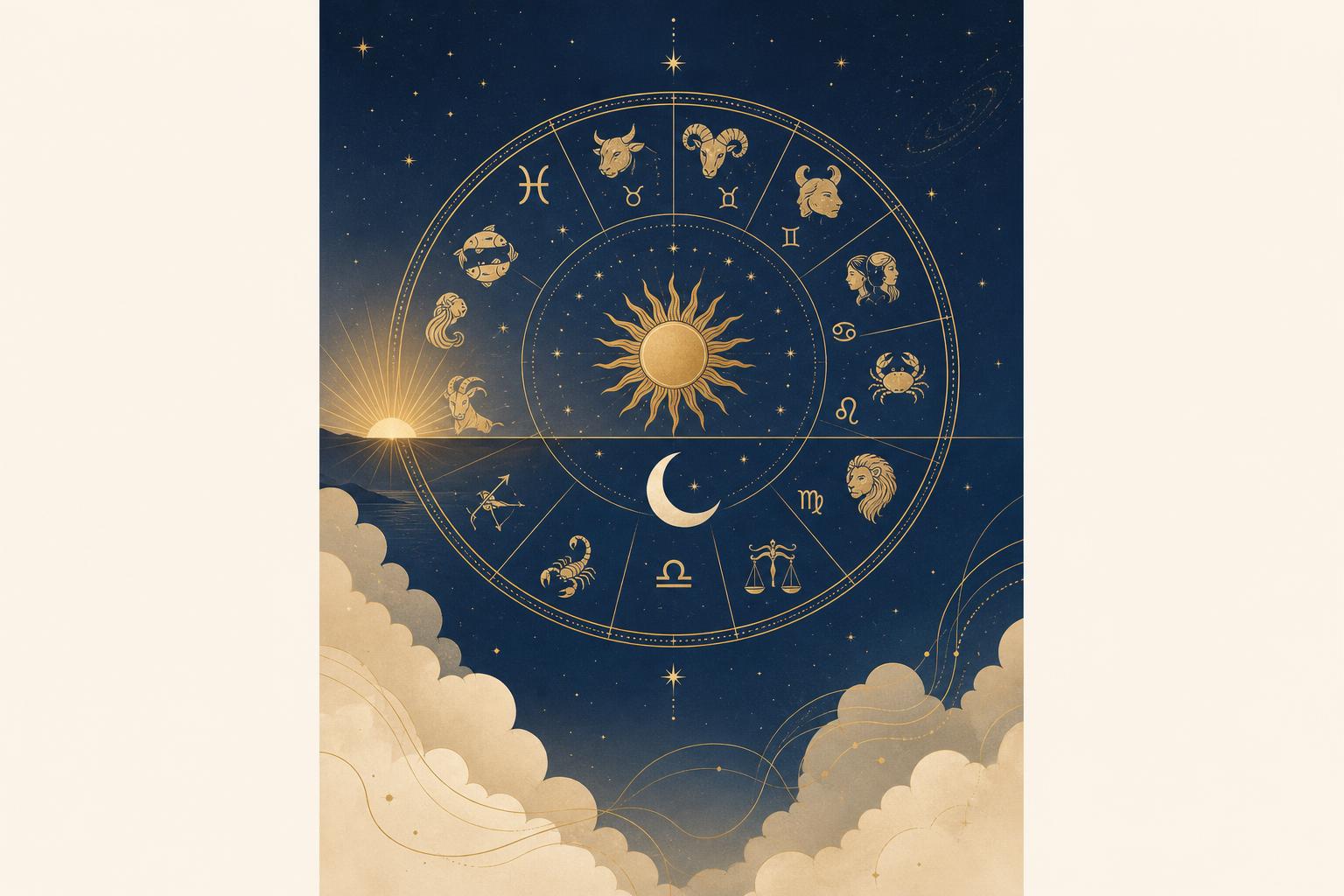
In normal conversations, “zodiac ‘refers to the sun sign. If you are born in a certain period, the Sun is in the astrological system used in one of the 12 signs: Aries, Taurus, Gemini, Cancer, Leo, Virgo, Libra, Scorpio, Sagittarius, Capricorn, Aquarius or Pisces.
The sun is associated with identity, personal direction, vitality and the way you assert your individuality. Therefore, the general horoscopes in magazines and sites start most often from the sun sign. It’s a useful starting point, but it only gives an overview.
For example, a Capricorn can be described by seriousness and orientation towards objectives, but this interpretation does not say everything about how it reacts emotionally or the impression it leaves at the first meeting.
What’s the ascendant?
Ascendant is the zodiac sign which rises to the eastern horizon at the time of birth. For its calculation, the exact time and place of birth are important, as the signs are rapidly succeeding on the horizon, approximately every two hours, depending on latitude and the time of day. ([astrology.com]] (https: / / www.astrology.com / article / birth-charter-reading-astrology-tips /? utm _ source = openai)
In astrological interpretation, the ascendant is related to the way you enter a space, react spontaneously and present yourself before the world. It can suggest the outside style, the initial rhythm and the way others perceive you before they know you better.
An Aries with an ascendant in Libra, for example, can combine the Sun’s initiative and direct energy with a more diplomatic or harmonious approach. It’s not a fixed rule, it’s a possible reading key.
What does Moon look like?
The sign of the Moon is the mark in which Moon was born. In astrology, Moon is associated with emotions, the need for safety, instinctive reactions and how you process intimate experiences.
If the Sun talks about what you assume and want to develop, Moon can be regarded as a more personal area: what soothes you, how you seek comfort and what you do when you no longer need to impress anyone. the month moves relatively quickly through the zodiac, so that the time and place of birth may become relevant especially on the days when it changes its sign. ([astrology.com]] (https: / / www.astrology.com / article / birth-charter-reading-astrology-tips /? utm _ source = openai)
How do you read them together?
One simple method is to ask three questions:
- Sun: who do I want to be and how do I express my identity?
- Month: What do I feel, what do I need and how do I react instinctively?
- Ascendant: How do I approach the world and what do others notice first?
These landmarks can explain why two people in the same sun sign seem very different. A Taurus with Moon in Gemini may have a calm base, but a mind always curious, while a Taurus with Moon in Cancer may seek more familiarity and emotional protection.
For a broader interpretation, triad should be seen alongside houses, planets and aspects. However, for a beginner, the difference between the zodiac, ascending and the Moon is enough to move from the general horoscope to a more personal and nuanced reading.
Detailed analysis of astral influences: Sun, Moon and ascendant: the three landmarks that help you understand your astrogram
The profound meaning of the theme Sun, Moon and ascendant: the three landmarks that help you understand your astrogram find a direct applicability in the in-depth study of astrographs and personal spiritual evolution. When we look beyond appearances, we see that every cosmic element acts as a catalyst for our inner transformations. Knowing these subtle mechanisms gives us the tools to navigate with confidence through daily challenges and to make decisions aligned with their own destiny.
From the perspective of modern astrology, the harmonious integration of this energy helps us overcome emotional bottlenecks and make the most of our native potential. The rhythm of the universe constantly invites us to reflect, balance and openness to new opportunities for personal and relational growth.
Practical guide and recommendations for energy recovery
To feel the positive effects of this configuration in everyday life, it is important to take a conscious and structured perspective. Here are some key steps you can take:
- Monitoring of interior states: Watch for subtle energy changes and correlate them with the transitions of the moment.
- Cultivation of mental clarity: Avoid impulsive decisions taken under the influence of stress or fatigue.
- Alignment with your own purpose: Use the symbolic lessons of this theme to clarify your long term priorities.
Conclusions and long term perspectives
Finally, understanding the complexity hidden behind Sun, Moon and ascendant: the three landmarks that help you understand your astrogram is not just a theoretical exercise, but a true inner compass. Through patience, self-knowledge and openness to the wisdom of the stars, we can transform any challenge into a constructive phase of evolution and harmony.