
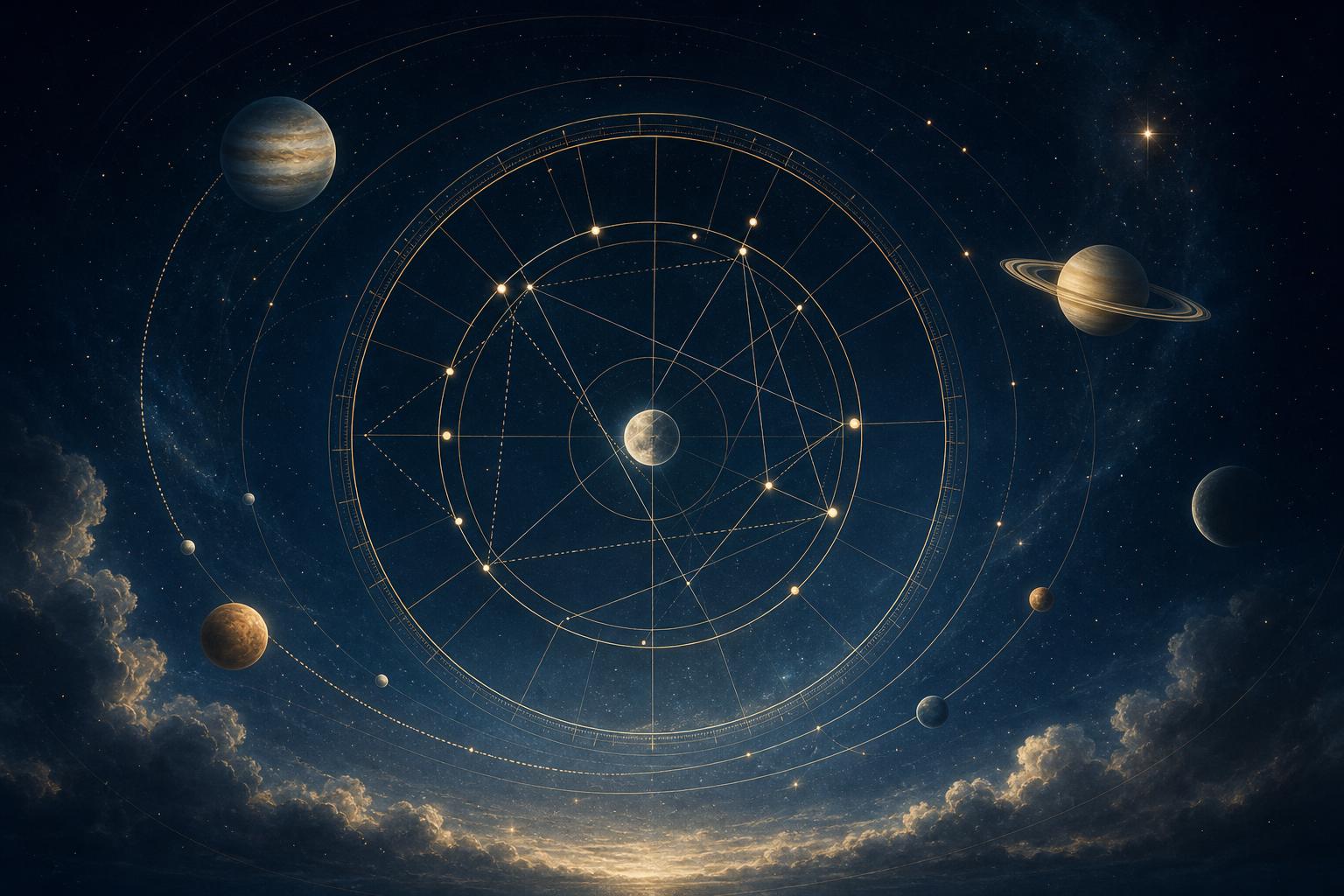
When astrologers talk about a “transit,” it refers to the current position of a planet in the sky and how it relates to a person’s native astrogram. In other words, transitions create a link between the present moment and the sky map at the time of birth.
Astrology uses these symbols to describe themes, rhythms and possible life contexts. Interpretation is indicative and can be seen as a reflection or entertainment tool, not as a scientific method and not as a sure prediction of the future.
What compares in an astrological transit
To analyze a transit, the astrologer primarily pursues three elements: the planet that is now moving, the point in the native astrogram that it reaches and the area of life associated with that astrological home.
For example, a transit of Mercury can focus on communication, learning or decisions, while a transit of Saturn is symbolically associated with responsibility, limitations and processes that demand patience. If the planet passes through the second house, the theme can be linked to resources and personal values; through the seventh house, attention can move towards relationships and collaborations.
However, interpretation is not based on one planet. It matters its position in the sign, the house crossed, the aspects formed with the home planets and the period during which influence is considered active.
Planet, sign and house: three levels of the message
The planet shows which function is enabled
In astrological language, each planet symbolizes a particular function:
- The sun is associated with personal vitality, identity and assertion;
- Month with emotional reactions, need for safety and customs;
- Mercury with thinking and communication;
- Venus with attraction, pleasure and values;
- Mars with the initiative, energy and how we act;
- Jupiter with development and openness to experiences;
- Saturn with discipline, boundaries and assumption.
The slow planets, such as Uranus, Neptune and Pluto, are mostly interpreted in relation to phase changes, maturation processes or transformations that extend over longer periods.
The sign describes how the theme manifests itself
A planet in a certain sign gives a nuance to its expression. A transit through a sign of fire can be read as more direct, courageous or initiative-oriented, while one through a sign of earth can suggest pragmatism, stabilisation and attention to results. These are symbolic tendencies, not fixed labels for all people in the zodiac.
The house indicates the field of life
The astrological houses show the area where the energy of transit is designed: work, family, friends, health, study, relationships or personal plans. Therefore, a serious interpretation does not stop at the statement “Saturn enters Patches’, but also asks which house this transit takes place for the person being examined.
What do the aspects between the planets mean?
One aspect is a symbolic angle between two planets. The harmonious aspects, such as trigon and sextile, are associated with cooperation and easier expression of a theme. Conjunction can intensify influence and quadrature and opposition can highlight tensions, choices or need for adjustment.
A difficult aspect should not be automatically interpreted as a negative event. It can signal a demanding period, but also an opportunity to see what is no longer working and what needs a different approach.
How to interpret a transit responsible
Useful reading starts with personal context, not a dramatic conclusion. The duration of the transit, the achieved home planet and the themes already present in the person’s life shall be checked first. Then they look for more clues that confirm each other, not a single configuration presented as a verdict.
Instead of “something bad will happen,” a more balanced wording would be: “period can bring more pressure on responsibilities and invite you to clarify your limits.” Thus, transit becomes a framework for observing its own choices, not a sentence.
In short, an astrological transit symbolically describes the encounter between the present sky and the native astrogram. It can provide questions about pace, priorities and change, but the ultimate meaning remains linked to the reality, freedom of choice and discernment of each person.
Detailed analysis of astral influences: Simple explained astrological transitions: how you read the influences of planets in the astrogram
The profound meaning of the theme simply explained astrological transitions: how you read the influences of planets in the astrogram finds a direct applicability in the in-depth study of astrographs and in personal spiritual evolution. When we look beyond appearances, we see that every cosmic element acts as a catalyst for our inner transformations. Knowing these subtle mechanisms gives us the tools to navigate with confidence through daily challenges and to make decisions aligned with their own destiny.
From the perspective of modern astrology, the harmonious integration of this energy helps us overcome emotional bottlenecks and make the most of our native potential. The rhythm of the universe constantly invites us to reflect, balance and openness to new opportunities for personal and relational growth.
Practical guide and recommendations for energy recovery
To feel the positive effects of this configuration in everyday life, it is important to take a conscious and structured perspective. Here are some key steps you can take:
- Monitoring of interior states: Watch for subtle energy changes and correlate them with the transitions of the moment.
- Cultivation of mental clarity: Avoid impulsive decisions taken under the influence of stress or fatigue.
- Alignment with your own purpose: Use the symbolic lessons of this theme to clarify your long term priorities.
Conclusions and long term perspectives
Finally, understanding the complexity hidden behind simply explained astrological transitions: how you read the influences of planets in the astrogram is not just a theoretical exercise, but a true inner compass. Through patience, self-knowledge and openness to the wisdom of the stars, we can transform any challenge into a constructive phase of evolution and harmony.