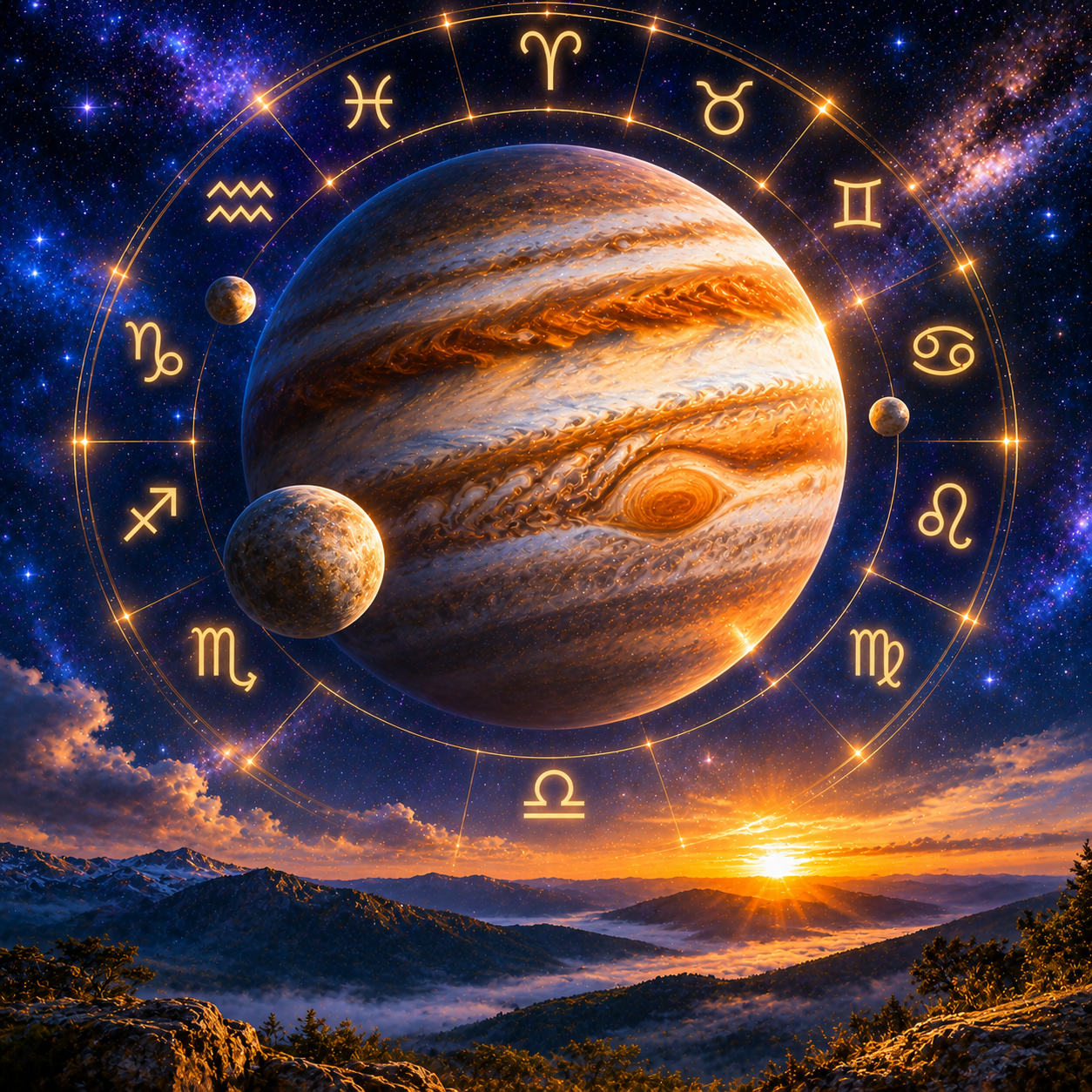
Astronomy and astrology: two almost identical words, two very different things. The first is the science that studies celestial bodies. The second is a symbolic system that attributes meanings to their position. Confusion is common, and whoever reads the horoscope should know what astrology can and cannot say.
In the article you find the basic differences, what scientific tests say about astrology, why people recognize themselves in horoscopes (the effect of Barnum and other mechanisms), which is the real role of astrology in culture and how to use it with a critical mind. It’s not an article “against” astrology, but one that separates facts from interpretations.
Astronomy: sky science
Astronomy studies stars, planets, galaxies and the universe as a whole. Use observations, mathematics and models that can be checked by anyone. It can accurately predict the moment of an eclipse or the position of a planet over decades. Her results are published, tested and continuously corrected.
Astrology: symbolic system
Astrology gives meaning to the position of the stars, especially at the time of birth. It starts from real astronomical data (the position of the Sun, the Moon, the planets), but their interpretation, for example “Venus in Taurus means stable affection,” is a cultural-historical convention, not a physical law.
| Astronomy | Astrology | |
|---|---|---|
| Subject matter | Heavenly bodies and physical phenomena | Symbolic meanings attributed to positions |
| Method | Observation, measurement, mathematical model, testing | Tradition, interpretation, analogies |
| Can she be disproved? | Yes, by new comments | Usually not, by vague wording |
| Predictions | Verifiable (eclipse, comets) | General, hard to verify |
| Statutes | Science | Pseudoscience, cultural value |
What scientific tests say about astrology
The claims of astrology have been tested several times. In 1985, Shawn Carlson published in Nature a double-blind test: experienced astrologers had to match home maps with personality profiles of real people. The results were no better than the event. Other research, including a long-term study of nearly 2,000 people born in the same period in Britain, analysed by Geoffrey Dean and Ivan Kelly, found no relationship between the position of the stars and personality traits, intelligence or life events.
That doesn’t mean the people who use it are “fools.” It just means that when tested under controlled conditions, astrology doesn’t come out better than chance.
Why do we still find that “fits”
- Barnum effect (Foreder): general descriptions seem personal. In 1948, psychologist Bertram Foreer gave some students the same text, telling them it was written specifically for them; they evaluated it on average by 4.3 out of 5.
- Confirmation bass: We see what confirms and forget what does not.
- Subjective validation: If we expect a link, we find it.
- Self-fulfilling prophecy effect: If we read that the day is right for something, we behave differently.
By what is still valuable astrology
Beyond predictions, astrology has cultural and personal value: it provides a language of conversation, a ritual of self-reflection, a link with ancient traditions and a way to note the passage of time through the cycles of the sky. Many people use it as a “useful fiction,” like a tarot or a diary. There’s nothing wrong with that, as long as it doesn’t replace medical, legal or financial information.
How you use critical-minded astrology
- Treat the descriptions as “fit me? why?”
- Don’t make health decisions, money or relationships just based on a horoscope.
- Check the predictions: write down what the horoscope says and compare what happened.
- Pay attention to phrases that promise too much (“you’ll win for sure,” “don’t get married”).
- They prefer sources that recognise their limits.
How to recognize responsible astrological content
A responsible material clearly states that it is a symbolic system, avoids promises and threats, does not pressure the reader to buy something and separates astronomical facts (e.g. planetary positions) from interpretations. About how you recognize quality content read also in our older articles about superficial astrological articles and read astrological recommendations.
What is and what is not on this site
On ZodiacSign.ro, the astronomical part (the calculation of the ascending, the planetary positions, the phases of the Moon) is based on verifiable formulae and data, and interpretations are explained as symbolic. For example, see the ascendant’s calculation guide: calculation can be reproduced, but what “means” the resulting sign is a convention.
Astrology, astronomy and pseudoscience: what the word means
A pseudo-science is a practice that presents itself as science, but does not follow its method: it does not formulate testable assumptions or ignore negative results. The word is not an insult to those who use astrology, but a classification. Philosopher Karl Popper proposed a criterion: a theory is scientific if it can in principle be disproved. Astrology, through its vague formulations, usually evades testing; when tested accurately, does not confirm. Therefore, it remains in the area of culture and symbols.
How can I influence the stars? What physics says
The only known forces through which a celestial body acts on the Earth are gravity and electromagnetic radiation. The gravity of the Moon produces tides; that of the planets upon a man is negligible. Many physicists compare the gravitational effect of a distant planet with that of an ordinary object in the room, much closer. There is no known physical mechanism whereby the position of a planet at the time of birth shapes a personality.
How to talk to someone who believes in astrology
If a close person uses astrology, a respectful discussion starts with curiosity: “what do you like about her?,” “how do you use her?.” For many, horoscope is a pleasant habit, not a rigid conviction. If you notice that an important decision (health, money or relationships) is based solely on astrology, you can suggest to consult other sources without ridiculing.
Common
- Confusion of terms. “Astronomer ‘and” astrologer’ are not synonymous.
- Use of astrology instead of a doctor. No map replaces a diagnosis.
- Disdain to those who read it. Most people use it as fun or reflection.
- The belief that science “has not tested.” It has tested several times.
A simple test that you can do at home
Take ten zodiac signs descriptions from a book or from a site, remove the names of the signs and mix them up. Ask a friend to give you the descriptions in random order and try to guess what your sign is without clues. If astrology described the features accurately, you’d hit well over 10% (that’s one in ten). In reality, most people who do the exercise come close to random, and many choose the description “the most beautiful,” not the right one. It is a simple demonstration of the effect of Barnum and has no claims for scientific study, but it is a fun exercise.
The summary is simple: what is measurable (the position of planets) can be checked, what is interpretation (what “means”) is a cultural choice. If you remember the distinction, you can read any horoscope without being fooled and without giving up his pleasure.
Frequently asked questions
Is astrology a science?
It’s a symbolic system. Controlled tests didn’t confirm his predictions.
Then why are so many people following her?
Out of curiosity, tradition, need meaning and pleasure to talk about oneself. The psychological mechanisms described above explain why it “fits.”
Can I read the horoscope without believing in it?
Many read it as entertainment or as an opportunity for reflection.
What’s the difference between astrologer and astronomer?
Astronomer is a scientist; astrologer symbolically interprets heavenly positions. They are different professions, with different methods and standards.
This article has an educational role and does not replace the advice of a specialist.